UK Borrowing Rose to £18.3 Billion in August, £3.5 Billion Above Forecast
UK public sector net borrowing was £18.3 billion in August 2026, £2.9 billion more than a year earlier and £3.5 billion above the Office for Budget Responsibility forecast, while borrowing for the financial year to August was £2.2 billion below the same period last year but £8.1 billion above forecast. Net debt was provisionally estimated at £2,985.5 billion, or 93.8% of GDP, five weeks before the Budget on 28 October.
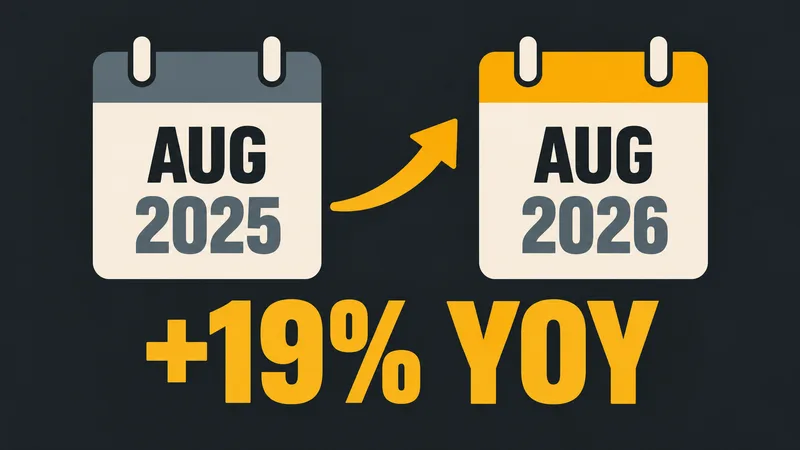
UK public sector borrowing was £18.3 billion in August 2026, £2.9 billion more than in the same month last year and £3.5 billion above the Office for Budget Responsibility's forecast. The overshoot came from spending rather than from weak tax receipts, and the figures land five weeks before the Budget on 28 October.
The Office for National Statistics published its Public sector finances, UK: August 2026 bulletin on 22 September 2026. Alongside monthly borrowing it reports debt and the wider public sector balance sheet, folds in the annual September data updates, and restates the two fiscal targets the government has legislated for.
August overshot forecast; the year to date fell versus 2025
Borrowing is the gap between what the public sector spends and what it receives. In August 2026 that gap was £18.3 billion, 19.0% higher than in August 2025 and £3.5 billion above the OBR's forecast for the month. In cash terms it was the second highest August on record, behind August 2020. The bulletin does not adjust these figures for inflation.
Cumulative borrowing in the financial year to August 2026 was £77.3 billion. That is 2.7% less than in the same five months of the previous financial year, but £8.1 billion above the OBR's forecast profile. Borrowing so far this year equals 2.5% of gross domestic product, 0.2 percentage points lower than a year earlier and the 10th lowest April to August period since comparable monthly records began in 1993.
The public sector current budget deficit, which covers day-to-day activity rather than investment, was £12.4 billion in August and £51.9 billion for the financial year to date, £4.8 billion above the March 2026 OBR forecast. Central government borrowed £13.3 billion in the month and local government £4.5 billion, up 49.5% on August 2025. The central government net cash requirement, the cash that has to be raised from financial markets, was £10.0 billion, £1.1 billion less than a year earlier and £2.0 billion below forecast.
Receipts rose while a VAT cut pulled the other way
Central government took in £89.8 billion in current receipts in August 2026, 3.8% more than a year earlier. Income-related taxes contributed most of the increase, rising 6.6% to £24.6 billion, and National Insurance contributions rose 3.3% to £17.3 billion. Corporation Tax receipts were 4.7% higher at £8.6 billion. Value Added Tax receipts rose only 1.7%, to £17.6 billion, and a temporary scheme is part of the reason.
The Great British Summer Savings scheme cut VAT from 20% to 5% on eligible children's meals, children's and family tickets for cinemas, theatres, concerts and shows, and admission to attractions such as theme parks, museums and zoos, in all four nations. The Treasury estimates the total cost at about £300 million.
The two official descriptions of that scheme do not give the same start date. The Treasury announcement of 21 May 2026 says the reduced rate runs from 25 June to 1 September 2026; the ONS bulletin dates the same scheme from 25 July. The bulletin does not mention the difference.
Self-assessed Income Tax is best read in pairs of months. The ONS estimates that £1.5 billion arrived in August 2026, £0.2 billion more than in August 2025, and it recommends adding July and August together because delayed July payments are recorded in August. On that basis the two months produced £18.6 billion, £1.9 billion more than a year earlier but £0.4 billion less than the OBR forecast.
The spending side explains the £3.5 billion
Central government spent £103.1 billion in August 2026, 5.0% more than in August 2025. Current expenditure rose 4.3% to £93.9 billion, with net social benefits up 6.9% at £29.2 billion and spending on goods and services up 5.7% at £39.8 billion. Net investment rose 17.5% to £5.3 billion.
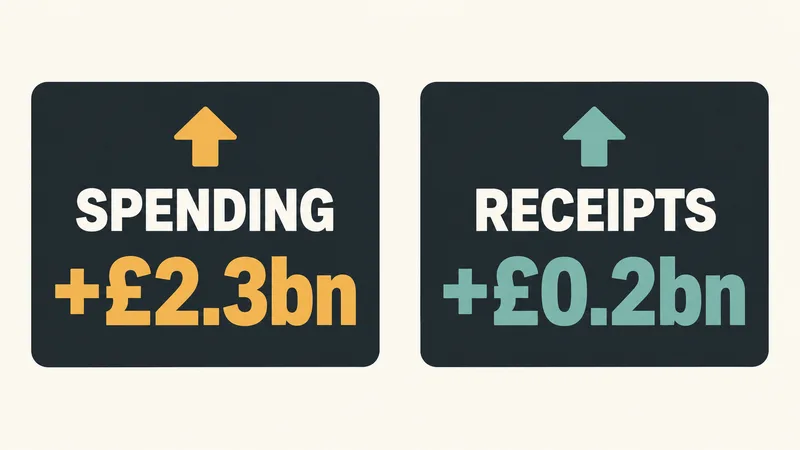
The ONS publishes its own comparison with the OBR's monthly profiles, and it locates the forecast error. Central government receipts came in £0.2 billion above forecast; central government expenditure came in £2.3 billion above it, which is the largest single reason public sector borrowing was £3.5 billion higher than predicted.
Debt interest moves on its own timetable. Central government interest payable was £8.8 billion in August 2026, the highest August figure since monthly records began in 1997 and again unadjusted for inflation, though lower than in each of the first three months of the financial year. Of that £8.8 billion, £2.1 billion came from the capital uplift on index-linked gilts, largely because the Retail Prices Index rose 0.3% between May and June 2026. Interest payable over the financial year to August was £50.0 billion, £0.7 billion more than a year earlier.
Debt near £3 trillion and a wider measure 11.5 points lower
Public sector net debt was provisionally estimated at £2,985.5 billion at the end of August 2026, £78.5 billion more than a year earlier. It equalled 93.8% of GDP, which is 1.3 percentage points lower than a year earlier, 0.8 percentage points below the OBR's forecast, and a level last seen in the early 1960s. The ratio fell because nominal GDP grew faster than net debt.
Public sector net financial liabilities, a broader balance sheet measure, were £2,620.4 billion, or 82.3% of GDP. That is 0.2 percentage points higher than a year earlier and 11.5 percentage points of GDP below net debt, because the extra financial assets in the wider measure outweigh the extra liabilities. The same balance sheet puts general government gross debt at £3,195.8 billion and public sector net worth at minus £722.2 billion.
Both measures matter for the government's rules. The fiscal targets announced in the Autumn Budget 2024 and in force from January 2025 require the current budget to be in surplus and net financial liabilities to fall as a share of GDP by the financial year ending March 2030. The latest readings are a current budget deficit of £47.4 billion in the financial year ending March 2026, £25.8 billion less than the year before, and net financial liabilities at 81.6% of GDP at the end of March 2026, 1.3 percentage points more than a year earlier.
What the September update changed
Every September the ONS folds annual data updates and methodological improvements into these figures, and this year pension data had the largest effect. For the financial year ending March 2026, that update increased borrowing by £0.4 billion, reduced net debt by £1.9 billion and reduced net financial liabilities by £39.5 billion. Two classification changes cut net financial liabilities further: moving the Scottish National Investment Bank into central government from the financial year ending March 2021, worth £0.7 billion, and better recording of investments in multilateral development banks, worth £1.2 billion. Neither changed borrowing or debt.
Revisions moved the other way for the most recent months. Borrowing for the financial year to July 2026 was revised up by £2.3 billion, from £56.7 billion to £59.0 billion, a change of 4.1%. The ONS attributes that to better source data arriving later and warns that the most recent monthly estimates are the most likely to move.
What is still open before 28 October
Three things this release does not settle. The OBR's next full forecast will be published with the Budget on Wednesday 28 October, so the comparison above uses the March 2026 outlook and its monthly profiles. The bulletin does not say whether the fiscal targets will be met. And the additional assets and liabilities inside net financial liabilities are updated quarterly rather than monthly, most recently on 22 September 2026, with the next update due on 22 December 2026.
Two consultations close around this release. The ONS is reviewing release times for market-sensitive economic statistics and is taking responses until Friday 30 October 2026, and its separate consultation on country and regional public sector finances closed on Sunday 11 October 2026. The next public sector finances release, covering September 2026, is scheduled for 21 October 2026.
Sources & further reading
- Public sector finances, UK: August 2026Office for National Statistics · accessed Oct 12, 2026
- Public sector finances, UK: August 2026 (release page)Office for National Statistics · accessed Oct 12, 2026
- Release calendar (published releases, newest first)Office for National Statistics · accessed Oct 12, 2026
- Budget to move power and money out of Westminster, and into every postcode around BritainHM Treasury, GOV.UK · accessed Oct 12, 2026
- Great British Summer Savings: VAT slashed to save families money on days outHM Treasury, GOV.UK · accessed Oct 12, 2026