Seattle’s Grocery Pricing Law Targets Personal Data. Here’s What It Covers
Seattle approved and signed an ordinance restricting personal-data-based prices at covered grocery businesses. The main pricing provisions are scheduled to begin Sept. 1, 2027.
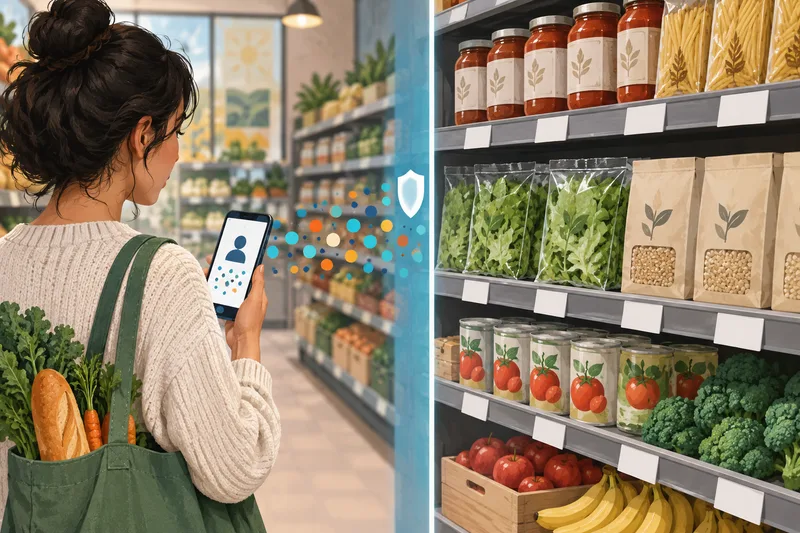
Seattle's Fair Pricing and Transparency ordinance targets grocery prices set or changed using shoppers' personal information. The city council approved it on Sept. 22, 2026, and the mayor returned the signed ordinance on Oct. 5. Its main pricing restrictions begin Sept. 1, 2027, so the law is not yet in force.
What the ordinance covers
The code defines algorithmic price discrimination as setting or changing a price through monitoring or automated analysis of a consumer's behavior, location, demographics, biometric data or other personal information. It includes information from third parties and random price variations between consumers. A covered retailer also cannot use an electronic shelf label to display a price modified through this process. The full ordinance gives the definitions and exceptions.
The ordinance cites a Consumer Reports investigation of an online Instacart test at a Seattle-area Safeway on Sept. 4, 2025. In the test, 39 volunteers saw different prices; reference prices for Premium saltines ranged from $5.93 to $6.69, while basket totals ranged from $114.34 to $123.93. The reported final sale price for the crackers was $3.99. These are historical online test figures cited as legislative context, not current in-store Safeway prices or proof that every retailer varies prices. The Consumer Reports investigation is linked for the original methodology.
Which businesses and goods qualify
The ordinance defines a grocery business as a Seattle retail store over 10,000 square feet that primarily sells groceries for off-site consumption; it is covered if it has 20 or more locations worldwide. A mixed-use store qualifies if at least 10,000 square feet of its sales floor is dedicated to groceries. A grocery-delivery provider operating in Seattle qualifies if it has at least 100 employees worldwide.
The scope depends on the business type. A covered grocery business may not use the prohibited method to change prices of any goods for a consumer. A mixed-use store is restricted for groceries, diapers, grooming and hygiene products, and over-the-counter drugs. A covered delivery provider cannot use the method for goods ordered from a grocery business, even when that grocer has fewer locations; a narrower product list applies to orders supplied by a warehouse or mixed-use store. The ordinance also covers mandatory fees required to receive the goods.
Discounts and records
A delivery price may vary for real delivery costs such as route, order size, time or weather when location is the only personal information used. A physical-store price available to everyone at that location is also allowed. These exceptions do not permit a higher delivery price based on a shopper's browsing or purchase profile.
A retailer may not use or share personal information to determine either the amount of a manufacturer- or third-party-funded coupon or how it is distributed or targeted. Discounts offered on equal terms to a broad group, such as students or seniors, may remain. A paid loyalty program can offer group tiers based only on prior purchases under the ordinance's conditions; tiers must apply to groups, not individual shoppers, and cannot infer price sensitivity or link purchase history with other personal information beyond program enrollment.
Covered retailers must disclose discount eligibility criteria where the discount is offered or on their websites and keep specified compliance records for three years. The ordinance identifies records such as pricing criteria, disclosure methods, prior-purchase tiers and personal data used to set prices. If required records are missing, the code creates a rebuttable presumption of a violation; a business can rebut it only with clear and convincing evidence. The city attorney may investigate. An injured person or class may bring a limited civil action against specified retailer types; for a grocery business, the code sets a threshold of 25 or more grocery establishments in Washington, while mixed-use stores and qualifying delivery providers have separate rules.
When the rules start
Section 1 takes effect on Sept. 1, 2027. Until then, a difference between online and in-store prices alone does not prove a violation. An app or algorithm by itself does not show that a price violates this ordinance: after the effective date, the covered business, product, personal data used and applicable exception will matter. The ordinance applies in Seattle and does not set prices for grocery shopping nationwide.

Sources & further reading
- Seattle City Council Record No. CB 121267Seattle City Council · accessed Oct 12, 2026
- Seattle Becomes First City to Stop Grocery Stores from Using AI Based Personal Data to Set PricesOffice of the Mayor, City of Seattle · accessed Oct 11, 2026
- AMA: Mayor Wilson’s team on Seattle Fair and Transparent PricingReddit, r/Seattle · accessed Oct 11, 2026
- Seattle Becomes First City to Stop Grocery Stores from Using AI Based Personal Data to Set PricesReddit, r/UpliftingNews · accessed Oct 11, 2026
- Seattle City Council votes to ban surveillance pricing in sale of groceriesHacker News · accessed Oct 11, 2026
- Instacart AI Pricing Experiment Inflating Grocery BillsConsumer Reports · accessed Oct 12, 2026