OPSS Baby Sleeping Bag Alert: Check for Armholes and No Hood
On 1 October 2026 the UK's Office for Product Safety and Standards issued a product safety alert for baby sleeping bags that lack arm holes or include a hood, citing suffocation and overheating risks. The advertising regulator warned about baby sleep ads the same day.
What OPSS published on 1 October
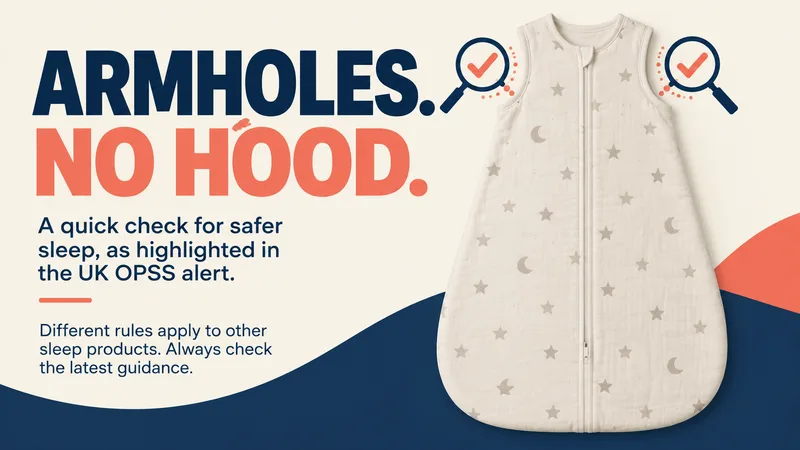
The Office for Product Safety and Standards issued a product safety alert for baby sleeping bags on 1 October 2026. The alert and a news story published that morning warn that bags without arm holes or with a hood are unsafe for unsupervised sleep.
The alert, listed on GOV.UK as PSA9, names no brand, no model and no retailer. It tells parents, carers, childcare settings, businesses and trading standards teams what to check on the product itself.
Why a hood or missing armholes is the hazard
Two failures are described. Without arm holes, a baby can slip down inside the bag until the fabric covers the nose and mouth, which risks asphyxia. A hood can move across the face during the night and produce the same result. Overheating is the second failure. Heat-retentive fabric, or fabric that encloses a baby's head, stops heat escaping, and OPSS notes a higher risk of sudden infant death syndrome when a baby gets too hot.
Where the alert draws its limits
The scope is narrow. The alert covers products marketed or intended as bags for babies to sleep in unsupervised in a crib or cot. It does not cover items designed to be worn in a pram, such as a pramsuit or a muff, and it does not apply to products designed specifically to swaddle a baby. It also does not apply to sleeping bags that meet the voluntary standard BS EN 16781:2018, which sets safety requirements and test methods for children's sleep bags for use in a cot.
Businesses get their own instructions. They must comply with the General Product Safety Regulations 2005 and place only safe products on the market. Bags intended for unsupervised sleep must include armholes and must not have a hood, and stock that does not comply has to be removed from sale with corrective action taken. OPSS recommends that retailers and importers consider supplying only bags that meet BS EN 16781:2018. Local authority trading standards teams, and Environmental Health in Northern Ireland, are asked to remove unsafe bags from sale in their areas.
The notices behind the alert
The alert follows a run of earlier enforcement. OPSS says it has published nearly 50 recalls or product safety reports for dangerous baby sleeping bag products since 2023. In 2025 the same regulator issued a safety alert for baby sleep pillows after child fatalities in the UK and overseas. In 2024 the Advertising Standards Authority banned an advertisement for a "newborn anti-roll pillow" that showed a baby in an unsafe sleep position.
What to do with a bag you already own
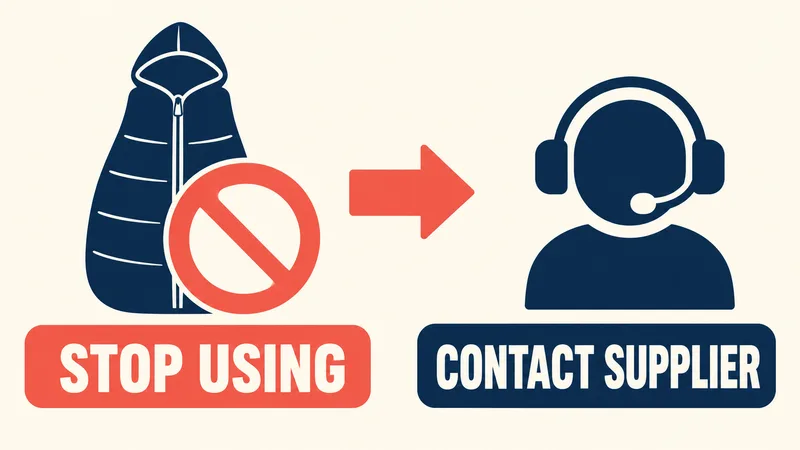
If a bag lacks arm holes or has a hood and was marketed for unsupervised baby sleep, OPSS says to stop using it and to contact the business that supplied it. You may be entitled to redress under the Digital Markets, Competition and Consumers Act 2024. The GOV.UK consumer rights page routes complaints through the national advice services: Citizens Advice on 0808 223 1133 for England and Wales, Advice Direct Scotland on 0808 164 6000, and Consumerline on 0300 123 6262 for Northern Ireland. Those services can refer a complaint to local Trading Standards officers and share complaint information with enforcement authorities, including the Competition and Markets Authority.
The same-day warning about baby sleep ads
On the same day, the Advertising Standards Authority warned parents about online ads for baby products that claim to help with colic, reflux, sleep and soothing. The warning followed a monitoring exercise using the regulator's Active Ad Monitoring system, which identified 350 online ads for baby products and services. A review of a sample found that nearly all of them referred to symptoms or conditions. Of the ads assessed, 59 percent were considered high risk, and 60 were flagged for follow-up because of the potential risk of physical harm. Sleep and elevation devices made up 56 percent of the ads assessed.
The problems the authority listed include claims that lying flat is the problem and that positioning or elevating a baby is the solution. It also flagged claims that sleep or elevation devices can reduce or stop reflux, ease distress, improve sleep or prevent colic, images of babies strapped into potentially unsafe sleep devices, and claims about sudden infant death syndrome and flat head syndrome.
NHS guidance and the Lullaby Trust advise that babies sleep flat on their backs on a firm, flat surface, and both warn against inclined or elevated sleep products. The authority's advice to parents is to treat quick-fix promises with caution, to check safer-sleep guidance from trusted organisations, and to speak to a healthcare professional when a product is unclear.
What neither notice says
Neither publication names the products it is worried about. The alert carries no brand list, no model list and no photograph, and its risk level field on GOV.UK reads "not provided". The advertising authority's news item does not name the advertisers behind the 60 ads it flagged. OPSS also does not break the roughly 50 earlier notices into how many involved missing arm holes, how many involved a hood, or how many ended in a recall rather than a report. And the alert does not say which retailers have already pulled stock.
What the alert does give is a test that takes seconds. Arm holes, no hood, and a product marketed for unsupervised sleep in a cot. If a bag fails that test, the next step is the supplier, and after that the national advice service.
Sources & further reading
- Product Safety Alert: Baby Sleeping Bags (PSA9)Office for Product Safety and Standards (GOV.UK) · accessed Oct 12, 2026
- Safety alert issued for baby sleeping bagsOffice for Product Safety and Standards (GOV.UK) · accessed Oct 12, 2026
- ASA warns parents over potentially unsafe baby sleep adsAdvertising Standards Authority · accessed Oct 12, 2026
- Consumer rightsGOV.UK · accessed Oct 12, 2026