Margaret Hamilton, Who Led Apollo's Flight Software Team, Dies at 90
Margaret Hamilton, who led the MIT Instrumentation Lab teams that wrote the Apollo onboard flight software, died on September 30, 2026, at 90. Her team's priority-driven software let the Apollo 11 landing continue after the 1202 alarm, she pushed the term software engineering into use, and the Smithsonian's National Air and Space Museum gave her its 2025 Michael Collins Trophy for lifetime achievement.
Margaret Hamilton, who led the MIT Instrumentation Lab team that wrote the Apollo onboard flight software, died on September 30, 2026. She was 90. MIT News reported the death on October 7 and Smithsonian magazine published its own account the next day. The design her team chose is the reason the Apollo 11 landing could continue after the computer raised its 1202 alarm, and the phrase she pushed for, software engineering, is now the name of the field.
What she led at the Instrumentation Lab
The number that explains her role is 400. By 1968 Hamilton was assistant director in charge of the Command and Service Module team, and more than 400 people were working on Apollo's software. MIT credits her with leading the onboard flight software teams for both the lunar module and the command and service module.
She had arrived in 1965, hired as the first programmer on the Apollo project at the lab and the first woman programmer on it. She worked first on the software for the uncrewed Apollo missions, then was promoted into leading the team that wrote the flight software for the crewed ones.
Looking back in 2009, she said the software work itself was at least as exciting as the events surrounding the mission, that there was no second chance, and that the team took the work seriously, many of them starting out in their twenties.
The National Air and Space Museum's citation lists program reliability work for NORAD's SAGE air defence system and, later, refining onboard electronics for Skylab and the Space Shuttle.
The simulator crash that became defensive programming
One episode from that period explains much of her later influence.
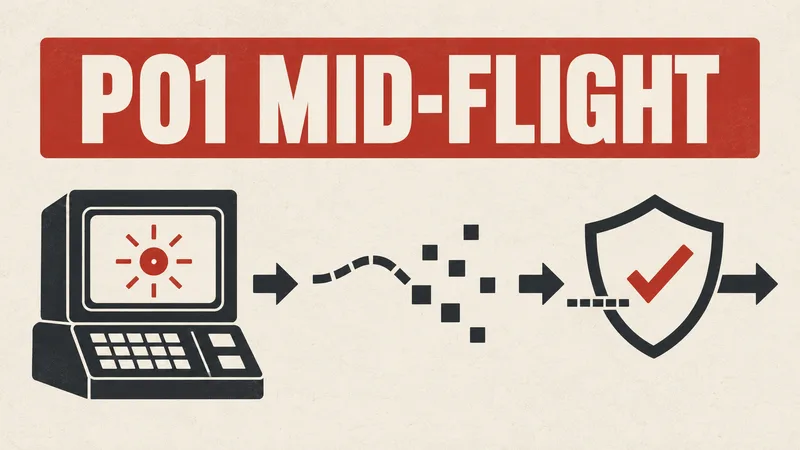
Her daughter Lauren, then four years old, was playing with the command module simulator at the Instrumentation Lab when she activated a pre-launch program called P01 mid-flight and crashed the simulator. Hamilton wrote a warning into the technical documentation and proposed a software fix to stop it happening on a real mission. She was overruled, on the grounds that highly trained astronauts were never going to make that mistake.
During Apollo 8 in 1968, Jim Lovell inadvertently launched P01 during the flight, and the onboard navigational data vanished. Hamilton and her team were called in, and after the incident her proposed changes were integrated into the program. MIT describes this as an early example of defensive programming: building software that can anticipate or correct its own errors.
The 1202 alarm on Apollo 11
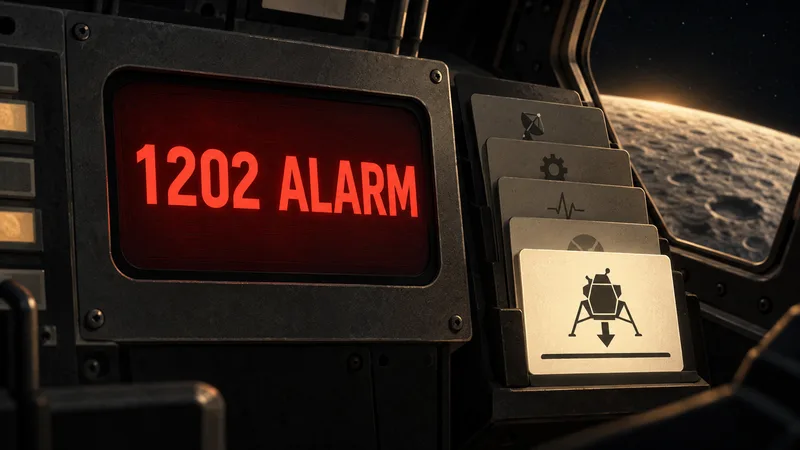
Her most-cited contribution came in July 1969, in the minutes before the lunar module was due to land. The onboard computer raised a 1202 alarm. A fault in a hardware switch had overloaded it, and the landing sequence was in doubt.
Hamilton's team had written priority-driven software that could shut down unnecessary background tasks and protect mission-critical ones. Houston let the landing proceed, and two men walked on the moon. In its 2025 citation, the National Air and Space Museum wrote that she "saved the fate of a lunar mission with her programming code."
Before Apollo: weather, SAGE and a newspaper advertisement
Hamilton was born in Paoli, Indiana, in 1936 and began studying mathematics at the University of Michigan in 1955 before transferring to Earlham College, where she earned a BA in mathematics with a minor in philosophy in 1958.
She moved to Boston in 1959 and soon took a temporary position in MIT's meteorology department, working with professor Edward N. Lorenz on weather prediction software. It was her first entry into programming, and MIT notes that the work informed Lorenz's later publications on chaos theory.
In 1961 she became a programmer at MIT Lincoln Laboratory on the Semi-Automatic Ground Environment project, the United States' first air defence system, writing software for the AN/FSQ-7 prototype computer. There she began to take an interest in software reliability, which MIT describes as a new and largely unexplored concept at the time.
The next move came through a newspaper. In 1965, preparing for graduate study, she saw an advertisement for the Instrumentation Lab, which was looking for people to develop software to "send man to the moon". She applied and was hired.
After Apollo: two companies and a term she fought for
Hamilton stayed at the Instrumentation Lab into the 1970s. As the Apollo program wound down, the lab spun out of MIT to become the independent Draper Laboratory. Its president and CEO, Jerry M. Wohletz, said the laboratory would honour her legacy and credited her leadership on the Apollo Guidance Computer software with helping ensure astronauts landed safely and returned home.
She founded Higher Order Software in 1976 around her approach of error prevention and fault tolerance, and a decade later founded Hamilton Technologies. Its flagship product, the Universal Systems Language, is a systems modelling language and methodology for engineering complex software with error prevention at its centre.
She also fought for the term she is credited with coining. In a 2018 interview she explained that she began using "software engineering" to distinguish software from hardware and other kinds of engineering while treating each as part of the same systems process. When she first used the phrase, she said, it was considered quite amusing.
The honours, including the 2025 Michael Collins Trophy
Hamilton received the Presidential Medal of Freedom in 2016. President Barack Obama's citation said she defined new forms of software engineering and helped launch an industry that would forever change human history, and that her software architecture led to giant leaps for humankind.
Other honours included the NASA Exceptional Space Act Award in 2003, a Computer History Museum Fellow Award in 2017, the Intrepid Lifetime Achievement Award in 2019 and induction into the National Aviation Hall of Fame in 2022.
In February 2025 the Smithsonian's National Air and Space Museum named Hamilton the recipient of its Michael Collins Trophy for lifetime achievement, and presented it on March 27 at its Udvar-Hazy Center in Chantilly, Virginia, alongside the OSIRIS-REx team, which took the trophy for current achievement. The museum's director, Chris Browne, said few individuals had shaped the aerospace computing field more over a career.
Her public profile grew after a photograph of her standing beside printouts of the Apollo software began circulating online, and she became a reference point for women in science and technology. In 2015 the Apollo code she helped develop was added in full to GitHub, and in 2017 she became an official Lego minifigure in a Women of NASA set. Smithsonian notes that the set has since been retired.
What the Smithsonian's computing curator said
Andrew Meade McGee, curator of computing at the Smithsonian's National Air and Space Museum, told Smithsonian magazine that her coding foresight and prowess made that mission a success, and that she created the logical software basis for many of the critical systems used to maintain infrastructure today.
What the announcement does not say
Neither MIT nor Smithsonian gives a cause of death. A memorial service is planned for the spring in Cambridge, Massachusetts.
Hamilton is survived by her daughter, Lauren Hamilton, her son-in-law, Richard Selesnick, two grandsons, four great-grandchildren and her siblings John, David and Kathryn.
Sources & further reading
- Margaret Hamilton, computing pioneer who led software development for the Apollo program, dies at 90MIT News · accessed Oct 12, 2026