Kentucky Repeats a 35-34 OT Finish, This Time Against No. 10 LSU
Kentucky tied LSU with 12 seconds left, then won in overtime on a quarterback run for two points—its second straight 35-34 OT victory.
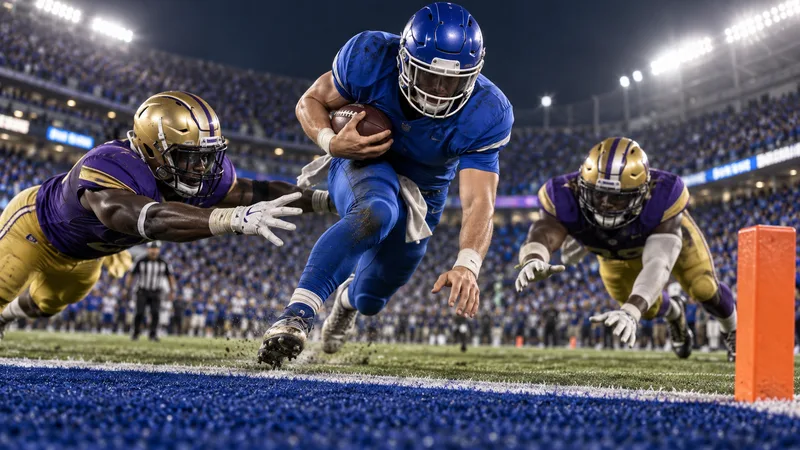
Kentucky beat No. 10 LSU 35-34 in overtime on October 10, finishing with the same score and method as its overtime win over South Carolina one week earlier. The Wildcats tied the game with a 33-yard field goal with 12 seconds left, then answered an LSU touchdown in overtime with a touchdown of their own and a two-point conversion. Quarterback Kenny Minchey ran the conversion up the middle. The official Kentucky recap confirms the sequence.
Two late field-goal misses did not end the game
Kentucky led 21-17 at halftime, but the fourth quarter became a series of lead changes. The Wildcats went ahead 24-20 on a field goal; LSU answered with a touchdown to make it 27-24. Kentucky then had two chances to tie or retake the lead and missed both field goals, first from 42 yards and then from 26 after recovering a fumble at the LSU 13.
The scoring pattern started with a long Kentucky run. C.J. Baxter gained 77 yards on the Wildcats’ first offensive play and scored on the next snap. Later, Brock Coffman returned a punt for a touchdown to put Kentucky ahead 14-10. LSU answered, but Minchey scored on a one-yard quarterback sneak on the last play of the first half, giving Kentucky the 21-17 lead at the break.
Kentucky opened the second half with an interception by Ty Bryant, but could not turn the takeaway into points. On fourth-and-two at the LSU 22, Minchey’s pass was broken up. LSU answered with a field goal, and the teams traded more scoring drives before reaching the late 27-24 margin.
The second miss left LSU ahead with 3:11 remaining. Kentucky’s defense forced a punt, giving the offense the ball at its own 19 with 1:37. Minchey completed passes to D.J. Miller, Ja’Kayden Ferguson and Kenny Darby to move the Wildcats to the LSU 23. A 33-yard field goal with 12 seconds left tied the score at 27 and forced overtime.
That finish was a small but important correction to the earlier misses. The final kick was shorter than the 42-yard attempt and came after the offense had moved into range. Kentucky did not need to score a touchdown in the final seconds; it needed one make to keep the game alive.
LSU scored first in overtime
LSU had the first possession of the extra period and needed only two plays to score. Quarterback Sam Leavitt scrambled 15 yards for a touchdown, and Scott Starzyk’s extra point put the Tigers ahead 34-27. Kentucky then had to answer with a touchdown before it could consider whether to end the game with a conversion.
The Wildcats moved toward the goal line on a 22-yard completion from Minchey to Darby. C.J. Baxter scored from one yard out, making it 34-33. Kentucky chose to go for two instead of kicking the extra point and extending the game. Minchey ran the quarterback draw through the middle for the winning points.
The games followed different regulation paths, but the overtime choice matched what Kentucky had done against South Carolina the week before. In both games, the Wildcats scored a touchdown in the first overtime and then converted for two to win 35-34. The earlier win used a pass for the conversion; against LSU, Minchey kept the ball himself.

What the repeated score actually means
Kentucky’s postgame notes say these were the first back-to-back overtime games in school history. They were also the first time the program had won consecutive games by the same score since 1911. Those are Kentucky records, not a claim about every team in the FBS.
The offense had produced 401 yards, with Minchey throwing for 246 and Baxter rushing for 123 yards and two touchdowns. Those lines help explain why Kentucky could recover from the missed kicks and stay in the game: the final possession and overtime conversion mattered most, but they rested on production across the full contest.
Sources & further reading
- No. 25 Kentucky Tops No. 10 LSU in OvertimeUK Athletics · accessed Oct 12, 2026
- Kentucky-LSU Postgame NotesUK Athletics · accessed Oct 12, 2026