GPT-6 Sol and Luna: what OpenAI released, who gets access, and at what price
OpenAI released GPT-6 Sol and GPT-6 Luna on September 22, 2026 as cheaper tiers below GPT-6 Astra, cutting API prices by about half against GPT-5.6 promotional pricing. Both models were in ChatGPT Work, Codex and the API on launch day, and GPT-6 reached the ChatGPT Chat tab on October 7.

OpenAI released GPT-6 Sol and GPT-6 Luna on September 22, 2026, adding two cheaper tiers to the GPT-6 family it began with Astra on September 3. Sol is the mid-range model, Luna is the low-cost one, and Astra stays at the top. Both new models cost about half of what the GPT-5.6 versions they succeed cost on the API, and both were available in ChatGPT Work and Codex on launch day. The Chat tab took another two weeks.
What OpenAI released
GPT-6 Astra arrived on September 3, 2026, and OpenAI calls it the most intelligent and aligned model it has built. Sol and Luna followed 19 days later, trained with similar methods, according to OpenAI, to carry Astra's gains in professional work, factuality, coding, computer use, and alignment into faster and cheaper models.
In the API they are gpt-6-sol and gpt-6-luna. There is no new flagship. The launch post says Astra "continues to be our best model across the board", and OpenAI positions Astra for the best results, Sol for difficult work at a lower price, and Luna for fast, high-volume use.
What the two models cost
OpenAI frames the release as a 50% cut against GPT-5.6 promotional pricing. Listed prices are per million tokens.
| Change | Input | Output |
|---|---|---|
| GPT-5.6 Sol to GPT-6 Sol | $4.00 to $2.00 | $20.00 to $10.00 |
| GPT-5.6 Luna to GPT-6 Luna | $0.20 to $0.10 | $1.20 to $0.50 |
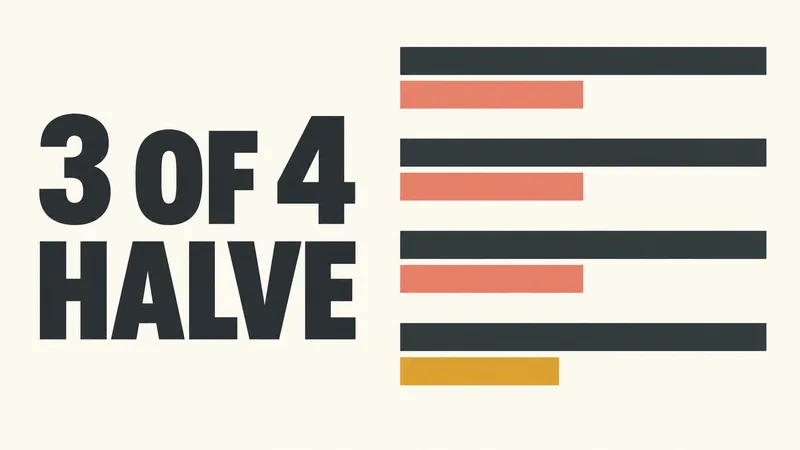
Three of the four movements halve exactly. The exception is Luna's output price, which falls from $1.20 to $0.50, a reduction of about 58%. OpenAI's table labels both rows "50% cheaper".
Astra costs $10.00 per million input tokens and $50.00 per million output tokens, five times Sol on both sides. Luna's input price is a twentieth of Sol's. GPT-5.6 Sol keeps its promotional rate at least through November 21, 2026, according to the API pricing page.
Cached input changes the arithmetic for agent workloads. The launch post promises higher cache hit rates by default and a 90% discount on cached input-token reads, along with a caching dashboard, a diagnostics tool, and controls for reasoning effort and tools that now keep earlier context cached. GitHub told OpenAI that the share of prompt tokens needing fresh processing fell by more than half across billions of requests.
The launch thread on Hacker News reached 1,779 points and 855 comments within three weeks, and the early replies compared per-token costs across providers rather than benchmark tables.
Who gets them, and where
On September 22, ChatGPT Work and Codex opened Sol and Luna to Plus, Pro, Business, Enterprise, and Edu users, and Free and Go users got GPT-6 Luna in the desktop app. OpenAI said the models were not yet in Chat and that the ChatGPT rollout would take most of the day.
On October 7, GPT-6 reached the Chat tab through a feature OpenAI calls Intelligent UI. Plus, Pro, Business, and Enterprise tiers went first, Free and Go the next day, and workplace administrator settings can hold back Enterprise accounts. In Chat, Sol runs the paid tiers and Luna runs Free and Go, both tuned for everyday conversation. OpenAI says that release did not change the models behind Work and Codex.
Developers get gpt-6-sol and gpt-6-luna through the API. A third model, GPT-6.1 Sol, followed on September 29 for Plus, Pro, Business, Enterprise, and Edu users in Work and Codex, at $2.00 per million input tokens and $10.00 per million output. OpenAI describes it as near-Astra intelligence at a fifth of Astra's price. It is a separate launch, ten days after Sol and Luna.
How they compare with their predecessors
The performance figures OpenAI published are its own, with competitor scores taken from public reports. On AutomationBench 1.0.6, a workflow test across 47 tools, GPT-6 Sol at extra-high effort scores 33.2% at $0.27 per task. OpenAI puts GPT-6 Astra at low effort at 30.3% and Claude Opus 5 at maximum effort at 26.9%, with a cost per task 11.1 times Sol's.
DeepSWE 1.1 records GPT-6 Sol at 68.8% at maximum effort, 1.1 points behind Claude Fable 5's 69.9% at extra-high effort and about 80% cheaper per task. Luna reaches 66.6%.
Agents' Last Exam, which covers long-horizon professional tasks across 55 sub-industries, has GPT-6 Sol at 56.4% at maximum effort, above Claude Opus 5's best score in that evaluation and 60% cheaper per task. The offline set of OSWorld 2.0 has Sol at 60.5% against 60.3% for Opus 5 at medium effort, at roughly 80% lower cost per task.
OpenAI's internal factuality evaluation, built from de-identified conversations where users had flagged an earlier model's error, records GPT-6 Sol making about half as many mistakes as its predecessor. OpenAI adds that those deliberately error-inducing conversations are not typical. Astra's communication style carried over as well, with less jargon and slightly shorter answers.
Two comparisons mix effort settings. OpenAI says Sol beats "low-effort GPT-6 Astra" on AutomationBench, and that Luna at maximum effort is comparable to Claude Opus 5 at medium effort. The competitor numbers come from vendor reports, so those two lines show how OpenAI positions its tiers.
What is still open
OpenAI's launch material does not give parameter counts, context windows, rate limits, or a regional availability table for Sol and Luna. The alignment results are internal evaluations built around deliberately hard cases, and OpenAI says they do not measure failure rates in ordinary use. No third-party reproduction of the benchmark figures appears alongside them.
On October 12, the API pricing page led with gpt-6.1-sol and gpt-6-luna rather than gpt-6-sol. The newer model carries the same standard rates as its predecessor. For developers who started using gpt-6-sol in late September, the launch posts do not explain whether to keep that model ID or move to gpt-6.1-sol.
Sources & further reading
- Introducing GPT-6 Sol and LunaOpenAI · accessed Oct 12, 2026
- Introducing GPT-6.1 SolOpenAI · accessed Oct 12, 2026
- GPT-6 Astra: A new generation of intelligenceOpenAI · accessed Oct 12, 2026
- GPT-6 and Intelligent UI for everyoneOpenAI · accessed Oct 12, 2026
- PricingOpenAI API Docs · accessed Oct 12, 2026
- GPT-6 Sol and LunaHacker News · accessed Oct 12, 2026