What the Dutch Government's DAWO Project Has Actually Shipped
The Dutch government's DAWO project publishes an open blueprint and a NixOS-based workplace image that reached version 0.1.2 on 15 August 2026. Its own pages name no vendor and give no migration schedule, so the Microsoft replacement framing comes from the discussion around it, not the project.
What DAWO is
The Dutch government is building a digital workplace out of open, replaceable components, and the project is called DAWO. It is not a single product, and it is not a finished replacement for anything. It is a blueprint and a community, with working software underneath.
The version that circulates is simpler: the Netherlands is replacing Microsoft with NixOS. That framing comes from a Hacker News thread in late September 2026, and it claims much more than the project's own pages do.
Those pages describe something narrower. DAWO is an open community in which government, industry and society build a digitally autonomous workplace together. Five goals sit at the top: digital autonomy, collaboration, security, innovation and verifiability.
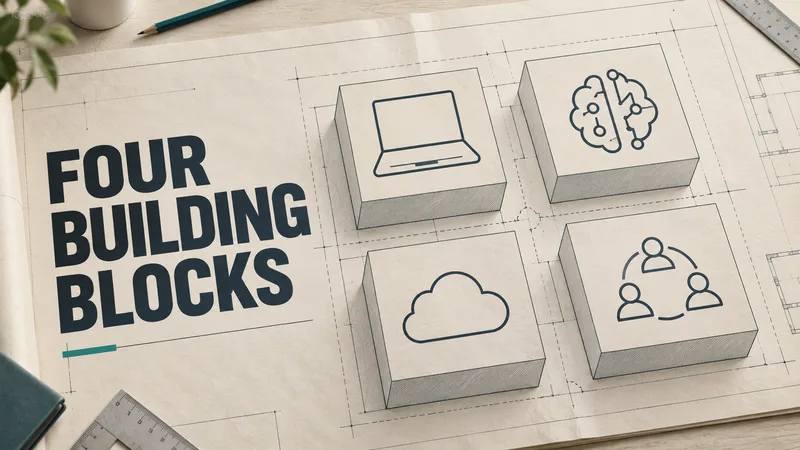
The four building blocks
The blueprint splits the workplace into four parts, each developed and replaced on its own.
The operating system part is the one with shipped releases: DAWO-NixOS plus installation building blocks for a reproducible workplace. A mobile component is listed as in development.
The AI part promises open and verifiable AI building blocks. The cloud part covers autonomous and verifiable cloud infrastructure. The collaboration part points at named software: Mijn Bureau and Nextcloud, covering communication, documents and working together.
The technology page states the reason for the split. Separate building blocks mean an organisation is not tied to one supplier and not tied to a system it cannot take apart.
What has actually shipped
The project's own record is smaller than the headlines.
The latest stable release listed on the technology page is DAWO-NixOS 0.1.2, dated 15 August 2026. The community news list shows the sequence before it: version 0.1.0 in June 2026, version 0.1.1 in July with a rollout at municipalities, and 0.1.2 in August.
The repositories are public. The blueprint sits on code.overheid.nl under the Ministry of the Interior's namespace, and the DAWO organisation mirrors work on Codeberg, including a core repository and a deployment wiki.
The current state is a young operating system image with three stable releases in about four months, a published blueprint, several open components and municipal interest. Nothing published describes a completed migration.
Who is behind it
The supporters page lists the organisations attached to the community, and the mix answers part of the vendor question. Government is represented by the Ministry of the Interior and Kingdom Relations and by the Association of Netherlands Municipalities, which explains the municipal rollouts in the release history. Industry participation includes Tata Consultancy Services, Realiz-IT, BB Open and mosa.cloud, and the security organisations DIVD Academy and DIVD.Works are listed as well.
The presence of commercial suppliers is the detail that pulls against a simple replacement story. The project is not framed as removing vendors from government IT. It is framed as making their contributions replaceable and inspectable, which is a different design goal, and it is why the blueprint is published separately from any supplier's product.
The community structure matters for the schedule. Anyone can read the member portal and the forum; posting requires an account. Events are run through the portal, and municipalities exploring the workplace are reported through the Dutch government's own digitaleoverheid.nl news channel.
Why NixOS
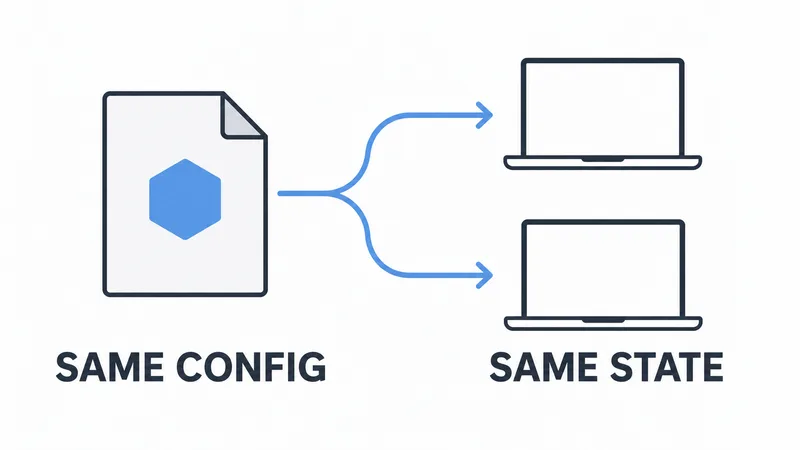
NixOS describes a machine declaratively. The configuration is code, and the same description can rebuild the same state.
For a government workplace that has a specific appeal. A reviewer can read the configuration, see which packages and versions a laptop runs, and rebuild it, without depending on an undocumented sequence of manual steps performed once by a supplier. Verifiability is one of the five stated goals, and the operating system choice is how that part of the blueprint delivers it.
The trade-off is equally specific. Declarative Linux systems have a smaller talent pool than mainstream enterprise fleets, and building a workplace on one means owning more of the integration work. The project's answer is an open community, which spreads that work and also means the pace depends on contributors.
What the project does not claim
The official pages do not name Microsoft, publish a migration schedule, or state a licence, budget or headcount. They also give no figure for how many civil servants use a DAWO workplace today.
That gap matters when the project circulates as a Microsoft replacement. Municipal pilots and municipal rollouts are not a national migration, and a workplace blueprint is not a complete productivity suite. Email, calendars, document editing and video meetings all have to come from somewhere, and the collaboration section is where those pieces are expected to live.
How to check it yourself
The community site publishes English pages at dawo.community with separate sections for the blueprint and the technology, and links straight to component repositories. The member portal's news list carries the release history with dates.
For anyone evaluating the idea rather than the politics, the useful test is to open the core repository, read the deployment strategy in its wiki, and see whether the configuration is as inspectable as advertised. That is a different question from whether the Dutch government has replaced its office software, and it is the one the project's material can currently answer.
The larger question, whether an open stack can carry a national civil service, has no published answer yet.
Sources & further reading
- Working together on digital autonomyDAWO.community · accessed Oct 12, 2026
- Back in control of the digital workplaceDAWO.community · accessed Oct 12, 2026
- The open architecture of DAWODAWO.community · accessed Oct 12, 2026
- Open building blocks. Replaceable by designDAWO.community · accessed Oct 12, 2026
- News: releases, developments and DAWO in the mediaDAWO community member portal · accessed Oct 12, 2026
- SupportersDAWO.community · accessed Oct 12, 2026
- Hacker News story search snapshot (30-day window)Hacker News (Algolia API) · accessed Oct 12, 2026